The demand side is not subtle. The United States spends about $2.2 trillion a year on construction, and it cannot find the people to do the work.
In 2025 the Associated Builders and Contractors estimated the industry needed to attract roughly 439,000 additional workers on top of normal hiring just to keep up with demand. The shortage is structural: the workforce is aging out faster than it is being replaced, and fewer young people are choosing the trades.
McKinsey has sized the prize at the other end. Closing construction’s productivity gap, they estimate, is worth on the order of $1.6 trillion in additional value a year. That is the space TerraFirma is building into: enormous spend, a chronic labor shortage, and a productivity gap wide enough to drive a fleet through.
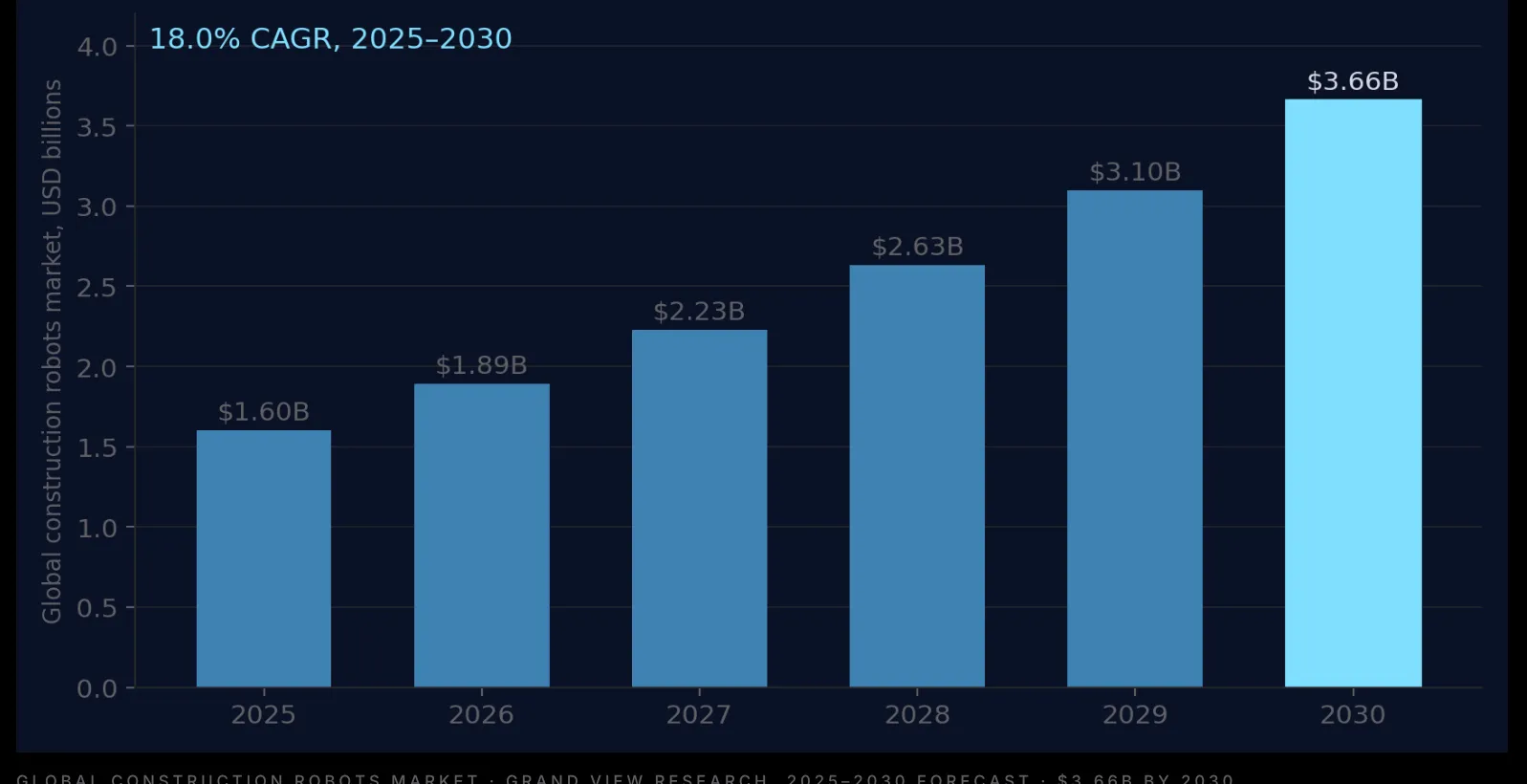
The robots are coming to meet it. Grand View Research projects the construction robot market will reach $3.66 billion by 2030, growing at an 18.0 percent compound annual rate. TerraFirma’s wager is that the winners will not be exotic new machines. They will be the machines already on site, retrofitted and put under command.